Mastering the Dorm-Room Dollar: A Student’s Guide to Financial Independence
Transitioning to college is about more than just picking a major; it’s your first real test of “adulting” in the financial world. Without a plan, that student loan refund or part-time paycheck can disappear faster than free pizza in a dorm lobby. Setting yourself up for financial success from day one requires the right tools, a bit of discipline, and a focus on building habits that will last long after graduation.
Choose the Right Tools: Debit vs. Credit
Your first move should be opening a reliable checking account. For students, a Debit Card is the ultimate “training wheels” for spending discipline because it pulls money directly from your account—you can’t spend what you don’t have.
- Instant Access: If you need a card quickly, you can get one same-day via Instant Issue at any Mutual Savings Credit Union branch.
- Safety & Control: Modern banking tools allow you to be your own security guard. For instance, the Mutual Savings Credit Union App lets you “turn off” your card if it’s lost and set spending limits to curb impulse buys. Additionally, activating Mastercard ID Theft Protection on your debit card provides a free layer of security by monitoring your personal info on the dark web.
- Building Credit: Once you’ve mastered debit, a credit card with no annual fee is a great tool to build a credit score—essential for renting an apartment or buying a car later. However, it’s a double-edged sword. Only get one if you can commit to paying the balance in full every month. Interest rates are high, and “minimum payments” are a recipe for long-term debt. Mutual Savings offers lower rate credit cards and you can start at a lower balance amount.
Leverage Digital Banking
Managing money is easier when it’s at your fingertips. Digital Services allow you to track every penny without needing a complex spreadsheet.
- Use the MSCU Mobile App to check balances before you buy.
- Utilize Mobile Deposit to deposit checks via your phone camera.
- Set up Integrated Bill Pay for recurring expenses like your phone bill or car insurance. This ensures you never miss a deadline or get hit with a late fee that could ding your credit.
- Stay protected from fraud with Fraud Alerts. These automated texts and emails alert you of any suspicious activity on your account.
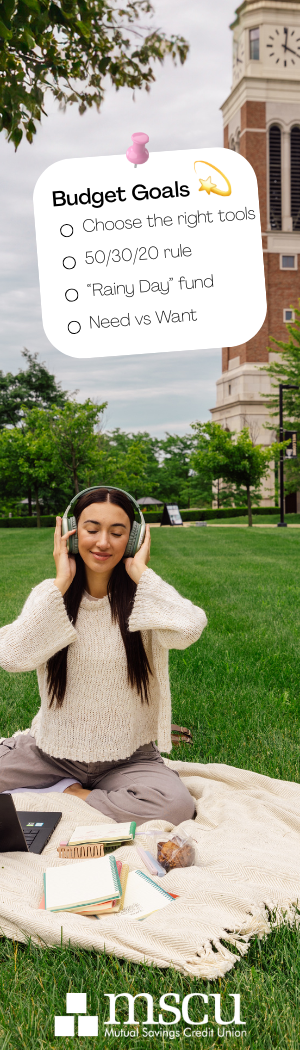
The 50/30/20 Budgeting Rule
Budgeting doesn’t have to be a nightmare. Try the 50/30/20 rule to keep your spending in perspective:
- 50% for Needs: Rent, groceries, laundry, and basic utilities.
- 30% for Wants: Streaming subscriptions, dining out with friends, and that midnight coffee run.
- 20% for Your Future: Savings and emergency funds.
Build a “Rainy Day” Buffer
Life happens—your laptop screen might crack, or you may need an emergency flight home. Aim to save a small “micro-fund” of $500 to $1,000. The best way to do this is to make it invisible: set up automated transfers to your savings account the moment you get paid. Even $20 a month adds up over a semester.
Smart Spending Habits
Here are a few tips to help you save:
- The “Student Discount” Rule: Never pay full price without checking for a discount first. From Spotify and Amazon Prime to local restaurants, your student ID is essentially a 10–15% off coupon for life.
- The “Needs vs. Wants” Check: Before every purchase, ask if it’s a necessity. If it’s a “want,” try the 24-hour rule: wait a full day before buying. Often, the urge to spend will pass.
- Master the “Dorm Chef” Life: Eating out is the #1 budget-killer. Even basic meal prep—like making your own coffee or sandwiches—can save you over $100 a week compared to daily takeout.
College is the best time to make small financial mistakes so you don’t make big ones later. By choosing the right tools from Mutual Savings Credit Union and staying disciplined with your digital tools, you’ll graduate with more than just a degree—you’ll have the financial confidence to take on the world.