Small Changes That Can Boost Your Savings:
7 Simple Ways to Save Money
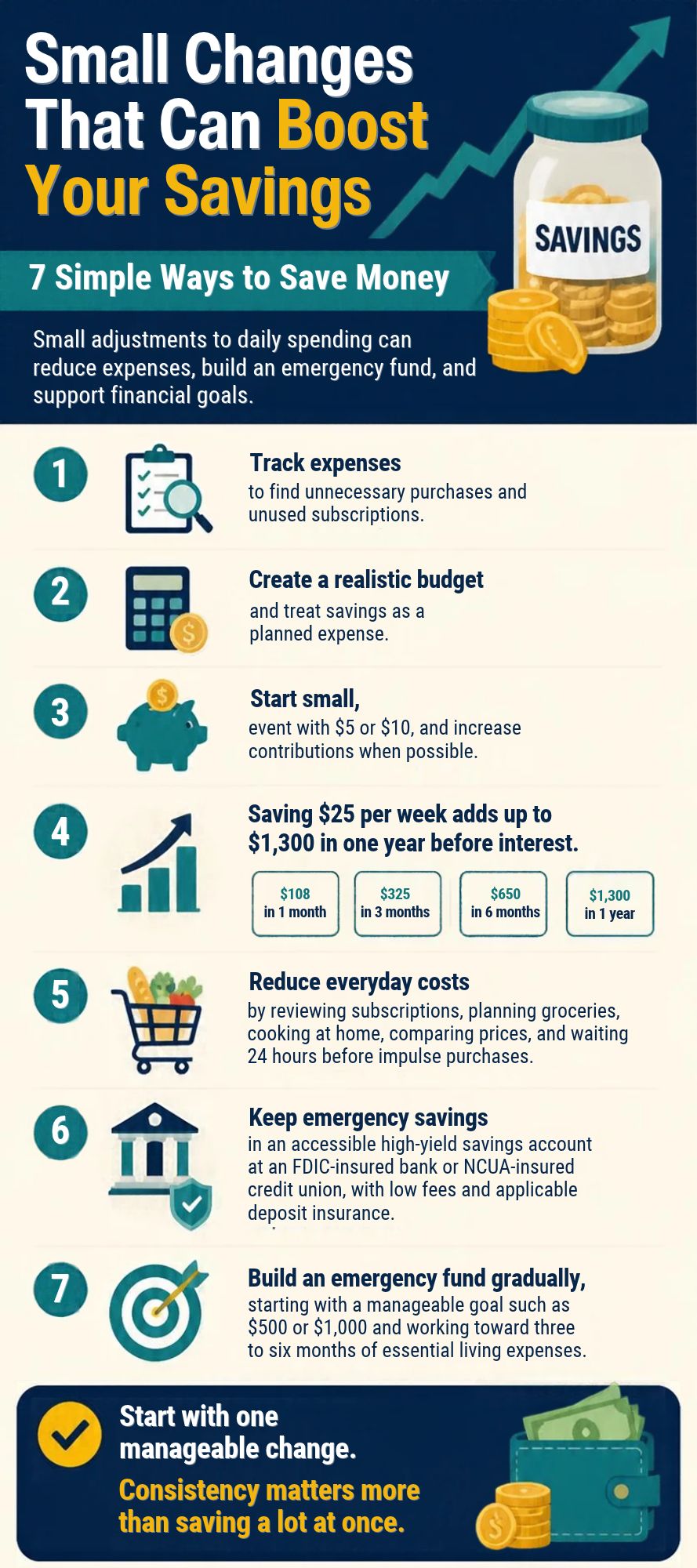
Want to save more money without making major lifestyle changes? Small adjustments to your daily spending habits can help you reduce expenses, build an emergency fund, and reach your financial goals.
Here are seven practical ways to boost your savings, even if you’re working with a tight budget.
1. How Can Tracking My Expenses Help Me Save Money?
Tracking your expenses helps you understand where your money goes each month. Review your spending to identify unnecessary purchases, unused subscriptions, and other costs you can reduce.
Quick tip: Use a budgeting app or spreadsheet to monitor your spending and identify opportunities to save.
2. How Can I Create a Budget That Helps Me Save More?
Start by listing your monthly income, essential bills, groceries, transportation costs, and other expenses. Then determine how much you can realistically set aside for savings.
Review your budget regularly and adjust it as your financial situation changes.
Quick tip: Treat savings as a planned expense rather than waiting to see what’s left at the end of the month.
3. How Can I Start Saving If I Have Very Little Money Left After Bills?
Start small. Even saving $5 or $10 whenever possible can help you develop a consistent habit. Review your recurring expenses, plan your grocery shopping, and look for small costs you can reduce without sacrificing essentials.
If your necessary expenses already exceed your income, focus first on reviewing your budget, exploring available assistance, and identifying ways to increase your income. You don’t need to force yourself to save money you cannot afford to set aside.
Quick tip: Set a manageable goal and increase it when your financial situation allows.
4. How Much Does Saving $25 a Week Add Up to?
Saving $25 a week adds up to $1,300 in one year, before interest.
Here’s how your savings could grow:
- 1 month: About $108
- 3 months: $325
- 6 months: $650
- 1 year: $1,300
Even small, regular contributions can make a difference over time.
Quick tip: Set up an automatic weekly transfer to make saving easier.
5. How Can I Reduce Everyday Expenses to Save More Money?
Start by reviewing your subscriptions, grocery bills, and nonessential purchases. Cancel services you rarely use, prepare meals at home, compare prices, and avoid impulse buying.
Before purchasing something you don’t need immediately, wait 24 hours to decide whether it fits your budget.
Quick tip: Focus on reducing expenses you can comfortably live without rather than cutting essentials.
6. Where Should I Keep My Emergency Savings for Unexpected Expenses?
A high-yield savings account at an FDIC-insured bank or an NCUA-insured credit union can be a good option for emergency savings. These accounts can offer interest while keeping your money accessible.
Look for an account with low or no monthly fees, no unnecessary withdrawal restrictions, and convenient access to your funds. Deposit insurance protects eligible deposits up to applicable limits.
Quick tip: Keep emergency savings separate from your everyday spending account to help avoid using the money for non-emergencies.
7. How Much Money Should I Have in an Emergency Fund?
Start with a manageable goal, such as $500 or $1,000, depending on what you can afford to save. Over time, work toward building enough savings to cover three to six months of essential living expenses.
The right amount depends on your income stability, monthly bills, and personal circumstances.
Quick tip: Build your emergency fund gradually. Consistent contributions matter more than reaching your goal all at once.
Frequently Asked Questions About Saving Money
What Is the Easiest Way to Start Saving Money?
Track your expenses, set a realistic savings goal, and regularly move a small amount into a separate savings account. Automating transfers can make the process easier.
Can I Save Money on a Low Income?
Yes. Start with small amounts when possible, reduce avoidable expenses, and look for ways to increase your income. If all your income goes toward essential expenses, focus on improving your financial situation before setting an unrealistic savings target.
Is It Better to Save Money Weekly or Monthly?
Both approaches can work. Weekly saving may be easier if you receive weekly paychecks, while monthly saving may suit people paid monthly. Choose a schedule that matches your income and budget.
Should I Pay Off Debt or Build Savings First?
It often helps to build a small emergency fund while making required debt payments. After that, consider prioritizing high-interest debt while continuing to save what you reasonably can. The right balance depends on your interest rates and financial circumstances.
How Can I Stay Motivated to Save Money?
Set specific goals, track your progress, and celebrate small milestones. Seeing your savings grow can encourage you to maintain good financial habits.
Final Thoughts: Can Small Changes Really Improve Your Savings?
Yes! Tracking expenses, creating a realistic budget, reducing unnecessary spending, and saving consistently can help you build financial security over time.
Start with one manageable change, stay consistent, and adjust your strategy as your circumstances improve.
Remember: You don’t have to save a lot at once. You just need a plan that works for you.