How Can You Protect Your Identity in a Digital World?
Your personal information is valuable. Passwords, Social Security numbers, debit card information and online banking credentials can all be targeted by scammers and identity thieves.
While you can’t prevent every scam, there are simple steps you can take to help keep your information secure and recognize potential threats.
How Can You Protect Your Identity Online?
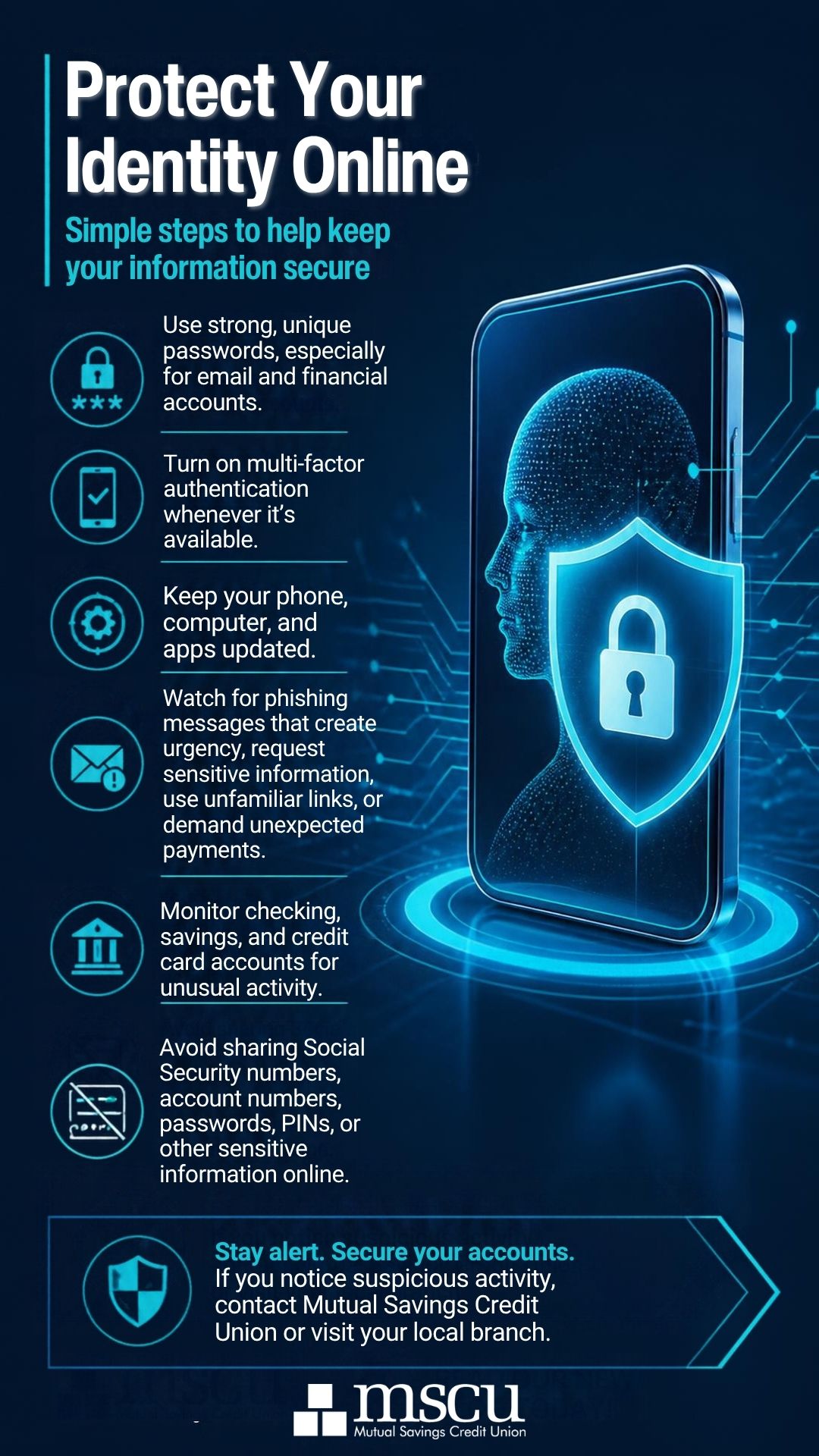
Protecting your identity starts with being aware of how and where you share your information. Use strong passwords, enable multi-factor authentication, keep your devices updated and think carefully before clicking links or providing personal information.
It’s also important to regularly monitor your financial accounts. The sooner you notice something unusual, the sooner you can take action
How Can Strong Passwords Help Protect Your Information?
Using the same password for multiple accounts can put your information at greater risk. If one account is compromised, other accounts using the same password could be affected.
Create unique passwords for your most important accounts, especially your email, financial and social media accounts. Avoid using easily guessed information such as your name, birthday or address.
A password manager can also help you create and securely store strong passwords.
How Can You Recognize a Phishing Scam?
Phishing scams are designed to trick you into sharing personal information, passwords or financial details. Scammers may contact you through email, text messages, phone calls or social media.
Be cautious of messages that:
- Create a sense of urgency or threaten immediate consequences
- Ask for passwords, account numbers or Social Security numbers
- Include unfamiliar links or attachments
- Claim you’ve won a prize or need to make an unexpected payment
- Appear to come from a company you know but seem unusual
If something doesn’t feel right, don’t click the link or respond. Contact the company directly using a phone number or website you know is legitimate.
What Is Multi-Factor Authentication?
Multi-factor authentication, or MFA, adds an extra layer of security to your accounts. Instead of relying only on a password, you may also be asked to enter a verification code, approve a login or use a fingerprint.
Turn on MFA whenever it’s available, especially for your email, financial and other sensitive accounts.
How Can You Protect Your Financial Accounts?
Make a habit of checking your checking, savings and credit card accounts regularly. Look for transactions you don’t recognize and pay attention to account alerts or notifications.
You should also keep your phone, computer and apps updated. Software updates can include important security fixes that help protect your devices and information.
If you notice suspicious activity on your account, contact your financial institution as soon as possible.
What Information Should You Avoid Sharing Online?
Think carefully before sharing personal information on social media or with someone you don’t know. Avoid publicly sharing sensitive information such as your Social Security number, account numbers, passwords, PINs or other information that could be used to access your accounts.
Remember that scammers can use small pieces of information to make their messages seem more believable.
How Can Mutual Savings Credit Union Help?
At Mutual Savings Credit Union, we’re committed to helping our members protect their financial information and make confident financial decisions.
Staying informed is one of the best ways to protect yourself. If you have questions about your MSCU account or notice suspicious activity, contact us or visit your local branch.
Protecting your identity doesn’t have to be complicated. By staying alert, securing your accounts and knowing what to look for, you can take important steps toward keeping your personal and financial information safer.