How Do I Pay Down Debt Strategically?
Paying down debt can feel overwhelming, especially when you’re managing multiple balances, interest rates, and monthly payments. The good news is that with the right strategy, you can take control of your debt, reduce financial stress, and make steady progress toward your goals.
Whether you’re paying off credit cards, personal loans, or other types of debt, having a clear plan can help you stay motivated and save money over time.
How Do I Start Paying Down My Debt?
The first step to paying down debt is understanding exactly what you owe. Before choosing a strategy, create a complete list of your debts, including:
- Current balance
- Interest rate
- Minimum monthly payment
- Due date
Having a clear picture of your debt allows you to create a realistic payoff plan and determine which balances should be your priority.
What Is the Best Way to Pay Off Debt?
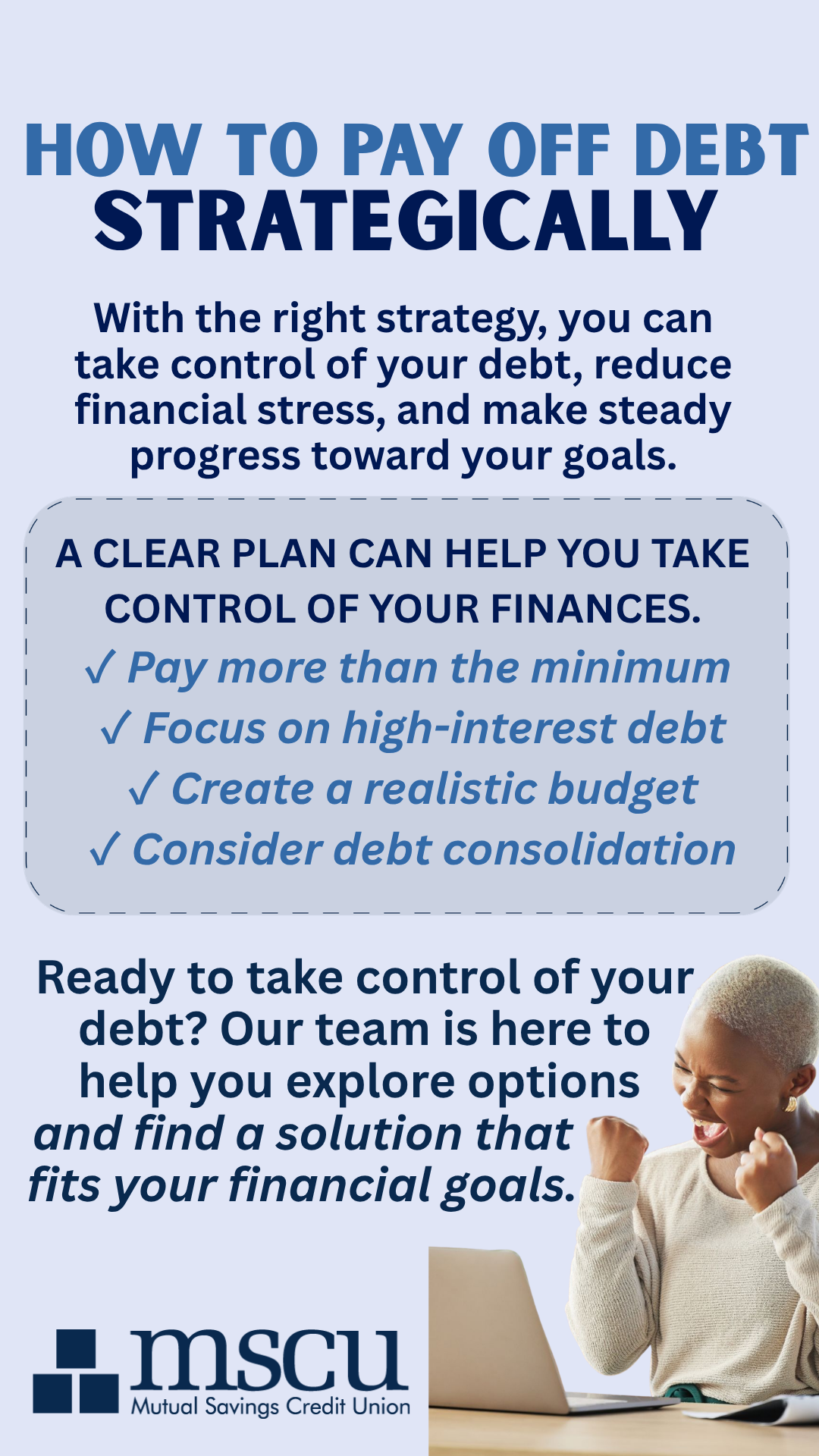
The best debt payoff strategy depends on your financial situation and what keeps you motivated. Two common approaches are the debt avalanche method and the debt snowball method.
Debt Avalanche Method – The debt avalanche method focuses on paying off the debt with the highest interest rate first while continuing to make minimum payments on your other accounts.
This approach can help you save money because you may reduce the amount of interest you pay over time.
Debt Snowball Method – The debt snowball method focuses on paying off your smallest balance first. Once that debt is paid off, you apply that payment amount toward your next smallest balance.
This strategy can help you build momentum by creating small wins as you eliminate individual debts.
The right method is the one you can consistently follow and that works best for your financial goals.
Should I Pay More Than the Minimum Payment on My Debt?
Yes, paying more than the minimum payment can help you pay off debt faster and reduce the amount of interest you pay over time. Minimum payments are designed to keep your account current, but making only the minimum payment can extend the amount of time it takes to eliminate your balance.
Even a small additional payment each month can make a difference. Putting an extra $25 or $50 toward your balance can help reduce your principal faster and help you reach your payoff goal sooner.
You can also speed up your progress by applying extra money, such as tax refunds, bonuses, or other unexpected income, toward your debt.
How Can I Create a Budget to Pay Off Debt?
Creating a budget helps you understand where your money is going and identify opportunities to put more toward your debt. Start by reviewing your monthly income and expenses, including housing, utilities, groceries, subscriptions, and discretionary spending.
Small changes can add up over time. Reducing unnecessary expenses or adjusting spending habits can create more room in your budget for additional debt payments.
Should I Consolidate High-Interest Debt?
Debt consolidation may be a good option if it helps you simplify payments, lower your interest rate, or create a more manageable repayment plan. Consolidating combines multiple debts into one payment, making it easier to track your progress.
Before consolidating debt, consider:
- Will the new interest rate be lower than my current rates?
- Are there fees associated with the loan?
- Will the monthly payment fit within my budget?
- Do I have a plan to avoid taking on additional debt?
A personal loan or other consolidation option may help some borrowers better manage their debt, but it’s important to compare your options and choose a solution that supports your long-term financial goals.
How Can I Avoid Going Back Into Debt?
The best way to prevent future debt challenges is to build healthy financial habits. Consider creating an emergency savings fund, using credit responsibly, and planning ahead for larger expenses.
Having savings available for unexpected costs can help you avoid relying on credit cards or loans when financial surprises happen.
How Long Does It Take to Pay Off Debt?
The amount of time it takes to pay off debt depends on your total balance, interest rates, monthly payments, and the amount you can contribute each month.
The key is consistency. Every payment you make moves you closer to becoming debt-free, even if progress feels slow at first.
Frequently Asked Questions About Paying Down Debt
What debt should I pay off first?
Many people start with the debt that has the highest interest rate because it can save money over time. Others prefer paying off the smallest balance first for motivation. Choose the strategy that works best for your financial goals.
Does paying off debt improve my credit score?
Paying down debt can help improve your credit profile by lowering your credit utilization and demonstrating responsible payment habits.
Is debt consolidation always the best option?
Not always. Debt consolidation can be helpful for some borrowers, but it’s important to compare interest rates, fees, and repayment terms before deciding.
Can Mutual Savings Credit Union help me manage debt?
Yes. Mutual Savings Credit Union is here to help you find solutions that support your financial goals. Whether you’re looking to simplify payments, explore loan options, or create a plan for managing debt, our team is ready to help.
Taking control of your debt starts with a plan. With the right strategy and consistent effort, you can make progress toward a stronger financial future.