Emergency Funds: How Much Do You Really Need?
Unexpected expenses can happen at any time. Whether it’s a car repair, medical bill, or temporary loss of income, having an emergency fund can help you handle life’s surprises without relying on credit cards or loans.
What Is an Emergency Fund?
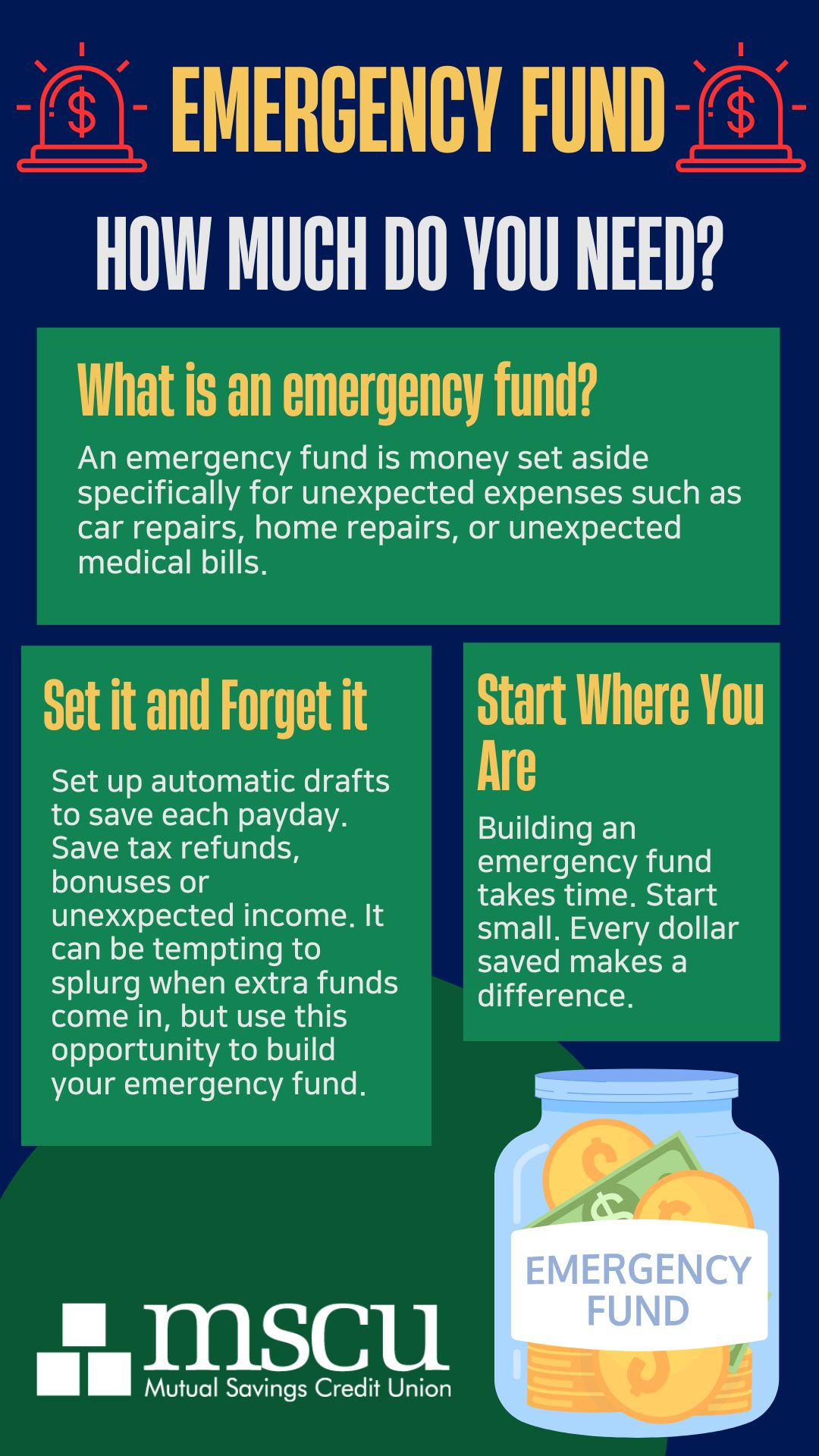
An emergency fund is money set aside specifically for unexpected expenses. It’s different from savings for vacations, holidays, or other planned purchases.
How Much Should You Save?
A common recommendation is to save three to six months’ worth of living expenses, but you don’t have to reach that goal all at once.
Start small:
- $500–$1,000 can cover many common emergencies.
- One month of expenses provides an extra layer of financial security.
- Three to six months of expenses is a strong long-term goal.
How to Build Your Emergency Fund
Growing your savings doesn’t have to be complicated.
- Set up automatic transfers to savings each payday.
- Save tax refunds, bonuses, or other unexpected income.
- Cut back on non-essential spending when possible.
- Treat savings like a monthly bill and contribute consistently.
Where Should You Keep It?
Keep your emergency fund in a separate savings account that’s easy to access when needed but not tied to your everyday spending. Mutual Savings Credit Union makes this easy by allowing members to set up club savings accounts that they can name what they want. For example, you could have one club account to save for vacation, and one for emergency funds, while another is for school expenses. Just ten dollars in each of these monthly would build savings over time.


Start Where You Are
Building an emergency fund takes time, and every dollar saved makes a difference. Starting today, even with a small amount, can help you feel more prepared and confident when unexpected expenses arise.